Many copy editors use the latest edition of Merriam-Webster’s Collegiate Dictionary as their go-to authority on spellings, definitions, and uses of words. The current edition, the eleventh (2008), does list the word go-to, by the way. But the latest unabridged Webster’s, Webster’s Third New International Dictionary has no entry for go-to. “What,” you say, “in an unabridged dictionary?” Mind you, Webster’s Third International was published back in 1971 , when go-to was not a documented, known word.
Webster’s Third International also doesn’t list ozone layer and many other new words, terms, or special phrases in English. Email is there – but only as synonym for enamel or a special shade of blue green.
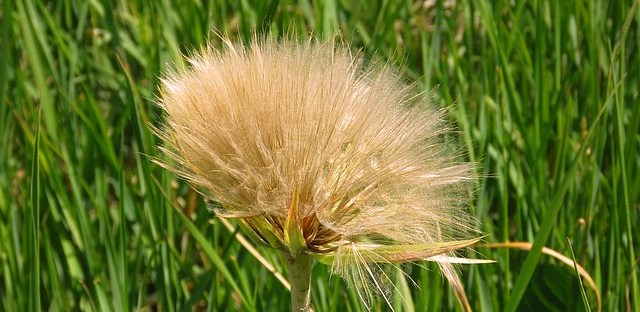
While older dictionaries lack the currency needed for most copyediting, they do hold delightful discoveries for the lover of words. Webster’s Third New International does have, and Merriam-Webster’s Collegiate has not, go-to-meeting, This is not an app, but your special clothes that you might wear to a community gathering after a week in your more utilitarian work clothing. That wasn’t my background, but I enjoy the mental picture! If we step further back to 1957 and Webster’s Second International Dictionary, we find neither go-to nor go-to-meeting, but there is go-to-bed-at-noon, another name for the yellow goatsbeard, an herb. (If I had relied only on the oral lore in my part of the world, I would have thought goatsbeard could only mean a type of edible mushroom. Well then!)
While I am sure readers are well aware that the date of a dictionary’s publication is critical, those published even about the same time are produced with various editorial assumptions, purposes, and intended audiences – enough to merit a separate post another day.
Meanwhile, as language changes at ever increasing rates, the correct spelling, meaning, or use of a word is a fast-moving target, and lexicographers are hard-pressed as they make appropriate, well-researched updates for each new edition. They add many descriptors within entries and explanatory material to indicate what qualifications and subtle shifts they are discovering for the words we use. It is wise for writers, copy editors, and others who work in any related field to select a dictionary appropriate for their topic and work, and then to use it skillfully.
When I copyedit, Merriam-Webster’s Collegiate is my default, but if you prefer another dictionary more appropriate to your work, please let me know at the outset. There are multiple publishers producing carefully researched, highly respected dictionaries with varying strengths appropriate to various contexts!
Merriam-Webster’s Collegiate Dictionary, 11th ed. (Springfield: Merriam-Webster Inc., 2008).
Webster’s Third New International Dictionary of the English Language Unabridged. (Springfield: G. & C. Merriam Co. 1971).
Webster’s New International Dictionary of the English Language Second Edition Unabridged. (Springfield: G. & C. Merriam Co., 1958).

 Perfect Page Services